Localization works at launch. Then it becomes the reason you delay launches.

The Website Localization Playbook for SaaS Teams

Get the framework to scale localization without it becoming a bottleneck — so you ship to new markets on schedule, stop wasting resources on the wrong languages, and build a process that doesn't break when you add the next one.

Trusted by localization, product, and growth teams.

Why Localization Breaks at Scale (and Most Teams Don’t See It Coming)

At first, localization feels simple. 

It works perfectly for one language. Two is harder. By the third or fourth, it starts to crack. 

  • Launches wait on translations.
  • The same content says different things across markets.
  • No one actually owns the workflow.

What starts as a straightforward process becomes an operational problem.

Is your localization strategy ready to scale?

  • Translated content is consistently behind the original
  • You've delayed a launch waiting for translations
  • Someone still uses email to manage a language
  • No one can name who owns the workflow end-to-end

If you checked even one box, you’re past “simple localization.” This playbook is for you.

A Playbook for Scaling Localization

Most localization advice stops at "what to do." 

This playbook addresses why things break as you scale — and how to design a system that doesn't.

Inside:  a decision-making framework for teams who are past the starting line and hitting the operational ceiling.

Inside the Playbook: The 5-Stage Framework

Plan → Prepare → Translate → Operate → Optimize

Each stage builds on the last. Skipping one early creates expensive problems later. 

Most teams are already inside this framework. They just don't know which stage they're stuck in

Prioritization

Most localization advice stops at "what to do." 

This playbook addresses why things break as you scale — and how to design a system that doesn't.

Inside:  a decision-making framework for teams who are past the starting line and hitting the operational ceiling.

Inside the Playbook: The 5-Stage Framework

Plan → Prepare → Translate → Operate → Optimize

Each stage builds on the last. Skipping one early creates expensive problems later. 

Most teams are already inside this framework. They just don't know which stage they're stuck in.

CTA: Download the full playbook

Block 1. Prioritization Insight

Most teams localize too much, too early. Or they focus on traffic first.

That’s how you end up translating blog posts nobody reads while losing deals in key markets.

The playbook shows you how to prioritize by revenue instead.

Block 2. Architecture Insight

Bad systems don't fail immediately. They just make everything slower until one day they stop entirely. 

We identify the one architectural decision that determines your ceiling before you ever hit it.

Block 3. Workflow Insight

At five languages, the process that used to work becomes the reason you miss every deadline. 

The playbook shows exactly which workflow breaks first and the order in which to fix the rest.

Where Localization Starts to Break

Early on, localization feels manageable. One language, one team, one workflow. Then the product grows, the team expands, and the markets multiply faster than the process can handle.

  • Content updates increase.
  • Languages multiply.
  • Teams expand.

Suddenly, you have

  • Releases delayed, waiting on translations.
  • Inconsistent content across different markets.
  • Unclear ownership.

Localization belongs in your release cycle. Anywhere else, it becomes a bottleneck.

CTA: Get the Playbook.

What You’ll Get

  • Know exactly which markets to localize next — and which to skip for now
  • Stop reactive translation cycles by integrating localization into your release process
  • Identify the one workflow creating your biggest bottleneck before it breaks
  • Design your architecture to support 10 languages before you're managing five
  • Avoid the three most common mistakes that stall localization at scale

How Teams Put This Into Practice

When teams get serious about scaling localization, they eventually hit the same question: what's the right system to run this on?

Localize is built for that moment — it handles the workflow automation and content sync so the strategy you build from this playbook can actually run

CTA: See how it works

Get the Website Localization Playbook

The teams that win at global growth don't have better translators. They have better systems.

This playbook gives your team the framework to get there.

CTA: Download the Playbook.

How Localize Helps

Revolutionize your translation process with intelligent workflows that drive global growth. Experience a transformative approach to translation and localization management that will make your content resonate with audiences worldwide.
Step 1

Install Code

Activating Localize on your site is easy with the straightforward installation of Localize's single JavaScript tag.
Step 2

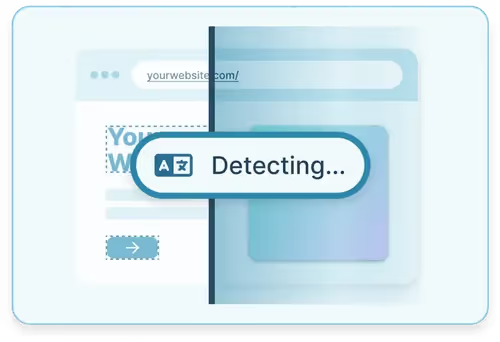
Detect

Localize automatically detects all of your content and pulls it into our dashboard for review and AI translations.
Step 3

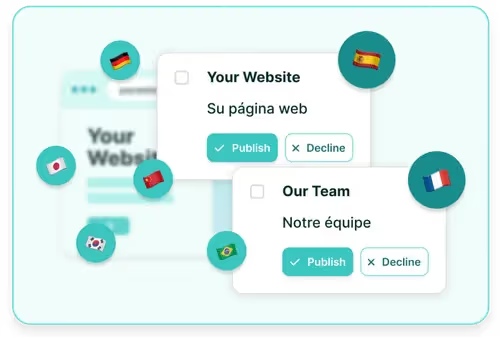
Translate

Effortlessly manage and translate your content in Localize's intuitive dashboard using AI-powered translation engines
Step 4

Live & Localized

Instantly release translations in real time using Localize’s innovative automatic content delivery workflow.

Scale Internationalization Without Slowing Engineering

Learn how leading brands use Localize to translate faster without straining developer resources
Stars

BetterHelp centralized localization with Localize to support a high-traffic therapy platform while maintaining quality, privacy, and compliance. By standardizing translation workflows and adopting advanced MT and glossary controls, the team turned localization into a scalable, governed capability that could grow with the business.

5

Languages

The Workflow

Step 1

Add Localize to your web experience to instantly capture translatable content.

Step 2

Define languages, terminology, and review workflows so translations stay consistent across every market and product surface.

Step 3

Publish translations centrally and keep content updates in sync automatically, reducing implementation time and ongoing engineering effort.

Ready to Scale Globally Without the Complexity?